Social Ecology Lab
The Stanford Social Ecology Lab, founded and directed by Nicole Ardoin, is an interdisciplinary research group at the intersection of environmental anthropology, sociology, psychology, and the learning sciences.
Through scholarship and collaborative practice, we bring social science insights to bear on pressing sustainability challenges to expand possibilities for a thriving today, tomorrow, and generations to come.
The lab’s primary goal is to understand how human behavior is shaped by, and shapes, social-ecological interactions and how those insights contribute to solving sustainability challenges.
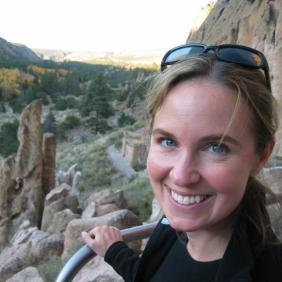
Nicole M. Ardoin
Nicole Ardoin, Emmett Family Faculty Scholar, is an associate professor in the Environmental Behavioral Sciences Group and a senior fellow in the Woods Institute for the Environment in the Stanford Doerr School of Sustainability. She is an affiliated faculty member in the Emmett Interdisciplinary Program in Environment and Resources (E-IPER).
Catalyzing Transformative Change for Sustainability
The Transformation Science Program explores and considers broad approaches to achieve transformative change for sustainability across contexts and scales.
Lab Mission and Values
In the Social Ecology Lab, we value an inclusive and interdisciplinary learning space where members are intellectually challenged, safe to explore new ideas, and supported in their pursuit of innovative social-ecological research. We support a breadth of interdisciplinary study grounded in social-scientific theories. We strive to create theoretical and methodological advancements within the fields and disciplines from which our scholarship draws, as well as real-world change. Although we are a community rooted in social science traditions, we value and pursue research across many ways of knowing, including drawing from and collaborating with the natural and physical sciences, engineering, the humanities, and community partners to advance social-ecological scholarship.
We approach our work with a shared passion for learning about the affective, cognitive, and behavioral dimensions of how people connect to the nature-rich world. We value collaboration with one another and with partners in the communities where we work as a means of forming connections and advancing collective knowledge. We pursue scholarship as a community built on kind and constructive feedback, mentorship, honesty, and shared accountability. We value scholarship that is creative, inclusive, and reflective of diverse perspectives, challenging existing conventions. Above all, we value responsible and ethical research that seeks to make the world a more just and sustainable place.
Lab Members and Collaborators
Our lab includes research scholars from across campus, as well as collaborators from nonprofits, community organizations, foundations, and elsewhere. Our backgrounds span the range of social sciences with an emphasis on interdisciplinary perspectives on social-ecological systems and work from the local to the ecoregional scales. We employ a mix of approaches including ethnography, interviews, network analysis, mapping, photovoice, and more to seek quantitative and qualitative insights into complex environmental and social conditions.